State the inspection decision
List the actual defects or measurements and the acceptance source for each. Supply good, bad and marginal examples. Keep visible appearance checks separate from hidden or functional properties that need another method.
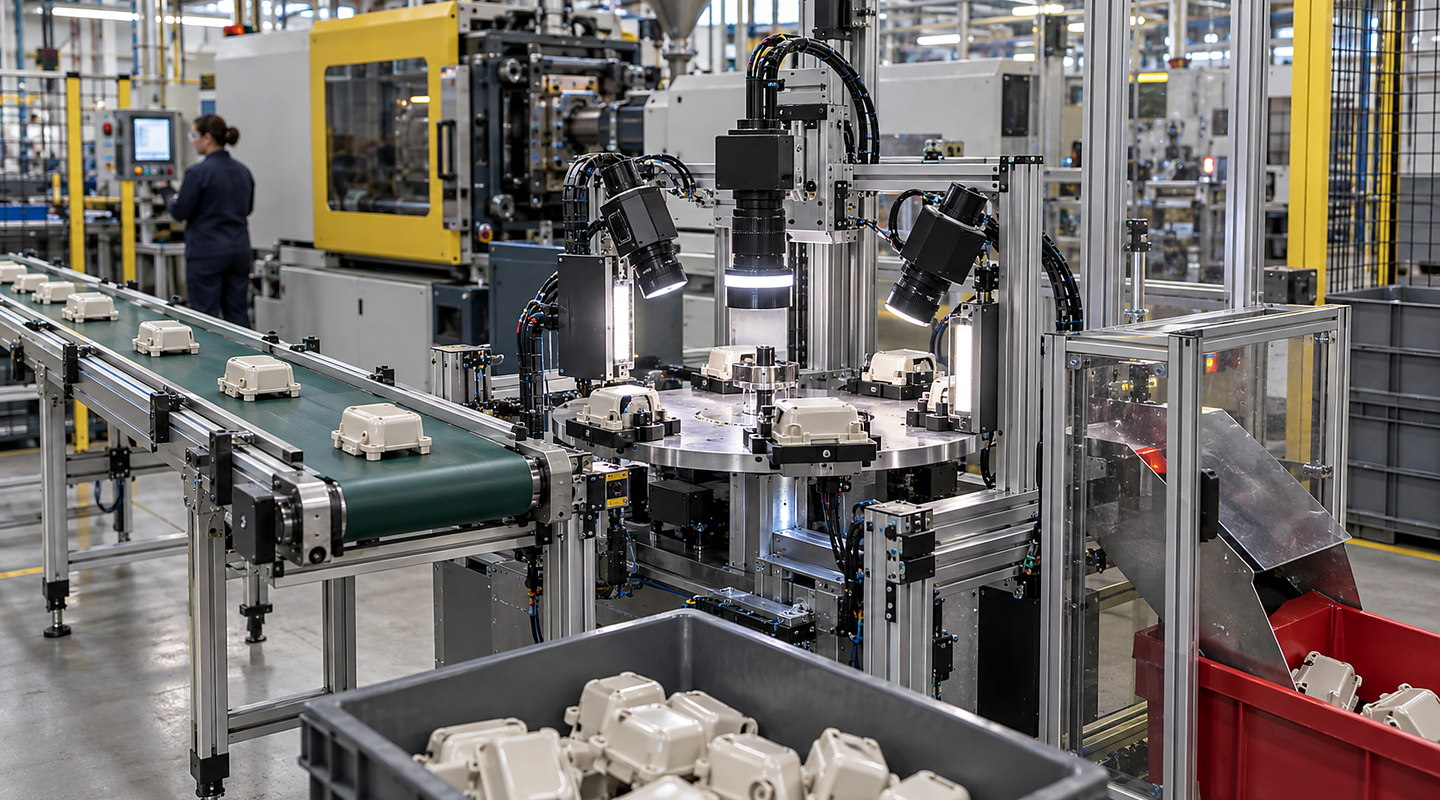
Adding vision inspection to an existing line requires a visible inspection feature, repeatable image capture and a controlled action on the affected product. Survey those three requirements together before choosing a camera or fixing an installation position.
Speak directly with Oxford Vision Systems about vision upgrades for existing production lines.
Identify the inspection decision and the point where the relevant feature is visible. Survey space, product presentation, triggers, controls and the available reject route. Trial representative packs at that location and agree installation, recipe control and failure handling before finalising the retrofit scope.


Use these decisions to define the proposed equipment and the checks needed for your application.
List the actual defects or measurements and the acceptance source for each. Supply good, bad and marginal examples. Keep visible appearance checks separate from hidden or functional properties that need another method.
Walk the product through the existing line and identify where the required feature is exposed. Check guides, hands, guards and adjacent machines for obstruction. If the feature is hidden at the available location, consider a different view or process stage.
Record product movement, pitch, rotation, vibration and changing ambient light. Trial the intended optics and lighting around these conditions. Preserve the necessary operator and maintenance access rather than assuming a temporary camera position is a workable installation.
Document the trigger, conveyor tracking, product recipe, ready/fault state and result interface. Identify which existing controller owns each action. Include stopped lines and close product spacing so results cannot become detached from the product inspected.
Survey the distance and handling between image capture and disposition. Decide what happens when a reject fails, the collection area fills or inspection is unavailable. Test the complete decision-to-action sequence, not only the camera’s pass/fail display.
Agree shutdown access, mechanical and electrical work, software changes and responsibility for the existing line. Retain approved recipes, backups and challenge samples. Define operator changeover and maintenance tasks before handover.
The right choice changes with visible defect or measurement definition for vision upgrades for existing production lines, good, bad and marginal sample range, your line layout and required results.
Follow the sequence below to resolve the main specification questions before committing to equipment or installation.
Collect a line layout, product flow, controller details and available access together with representative sample defects.
Prove visibility and stable decisions across the real product and presentation range before final hardware selection.
Challenge timing, product tracking, wrong recipes and reject or hold behaviour including line interruptions.
Record installation changes, approved setup, training and maintenance needs. Agree how future line or artwork changes trigger review.
An installation window should include a defined path from the existing line state to the accepted new inspection state. Agree that path with the responsible engineering and quality teams before the equipment arrives, including what happens if a required check cannot be completed.
Keep approved drawings, configuration versions and the relevant interface description. Identify who controls the conveyor, recipe source and reject action. Record physical space and access before installation so a temporary arrangement does not become an undocumented permanent one.
Mounted equipment and connected signals establish only part of readiness. Confirm the defined inspection decisions using identified samples, then test the result-to-product association and the agreed response to unavailable results. Include the actual product spacing and stop/restart conditions.
Document who can accept completed work, hold production or authorise a controlled restoration of the previous approved configuration. Restoration must follow the site’s engineering and safeguarding process; it is not permission to bypass a required quality or safety control. State which physical and software changes would need to be restored together.
Retain the accepted recipe and challenge samples with clear instructions for recognising an unexpected result. Allocate responsibility for later product, lighting or line changes. Use the retrofit selection guide to compare installation and recovery scope alongside the optical concept.
Your final solution for vision upgrades for existing production lines must reflect the law, current standards and site-specific risks that apply to your installation.